

In this article I want to explain and emphasise on the effect of grazing and mowing on the C/N (Carbon to Nitrogen) ratio in prairie soils, and why a balanced C/N ratio is so important.
What is the C/N ratio and why is it important?
The C/N ratio represents the amount of carbon and Nitrogen in comparison to each other. So how much carbon there is in respect to nitrogen. If the ratio is low, 4-8 there is a lot of nitrogen in respect to the carbon. If the ratio is high, 13-18 the carbon is high. The optimal ratio in prairie soils is from 10-12. So 10-12 carbon molecules to every nitrogen molecule.
Every liveform has a C/N ratio. But it can be slightly different for each species. For example bacteria have a C/N ratio from 4-8. Fungi in occurrence have a much higher C/N from 8-29.
This already shows us why the C/N ratio in soils is important. If we want more fungi dominant soils we have to have a lot more carbon. In contrast, if we want a highly bacteria dominant soils, we need more nitrogen.
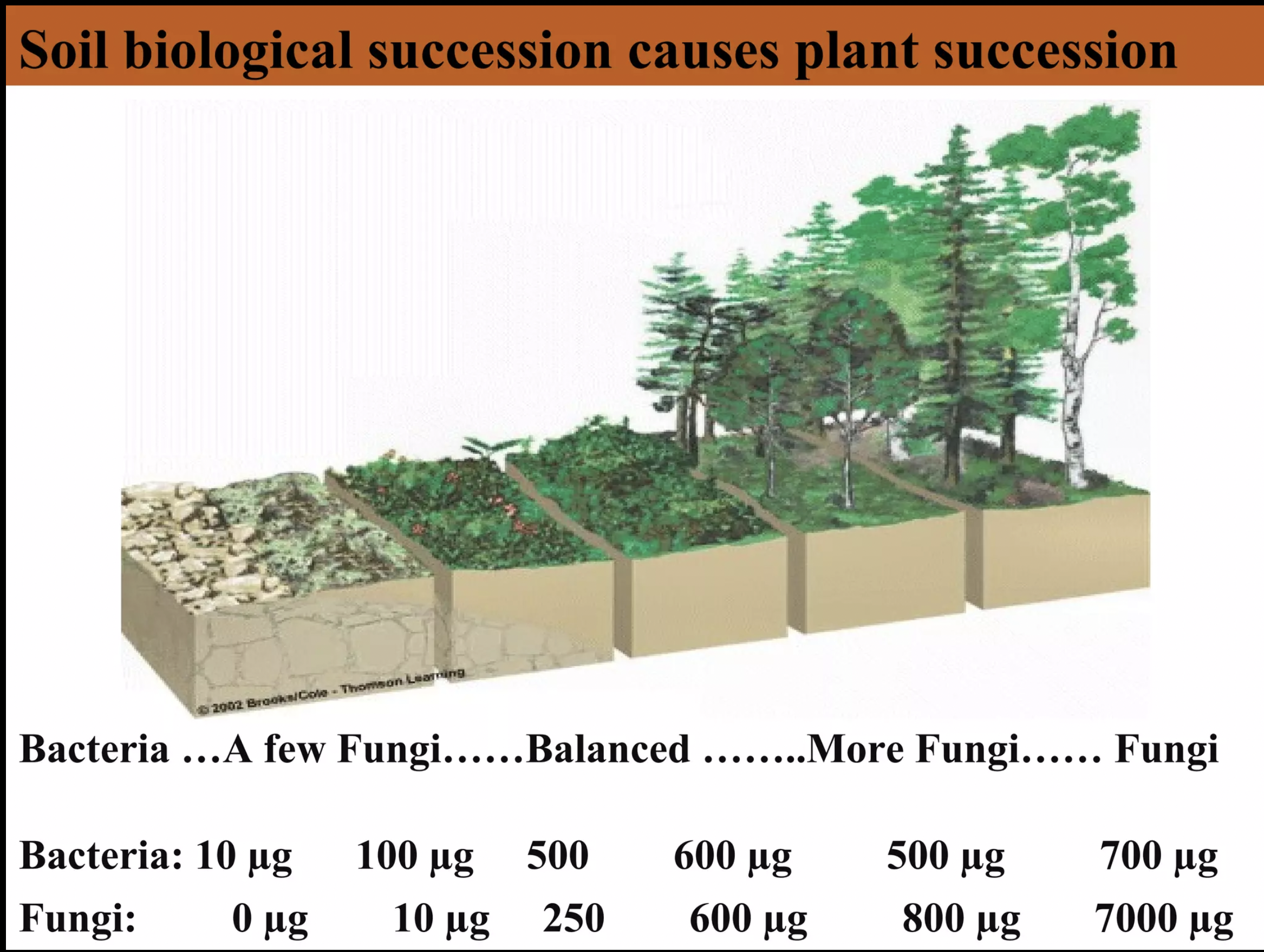
As you can see in this diagram (taken from Elaine Ingham), in a prairie we want a balanced population of bacteria and fungi, tending to a bit more fungi though.
This is why we thrive for a C/N in the range of 10-12. To have enough N for bacteria and enough C for fungi.
Because the C/N influences the microbial population in soils, it also influences the nutrient cycle (decomposition of dead litter and availability of nutrients).
If out of balance the nutrient cycle will work less well and plants will get less nutrients to function optimally. This then affects our livestock and the food they produce.
Grazing management influences the C/N ratio in soils
Now we might ask the question how grazing management can influence the C/N ratio.
Grazing will increase the nitrogen content in soils. By reducing plant biomass and turning it into dung, which is highly rich in N, ruminants increase the N content in prairies.
In occurrence, rest will increase the carbon content.

A well rested prairie.
This means if we continuously graze a pasture, it will be very high in N, low in fungus and high in bacteria. Also if we mow a pasture for hay, we will have less carbon in the soil.
So to have a balanced C/N ratio with maybe even slightly more fungi, it is crucial that we rest our soils between grazing. This will increase the carbon content, by increasing the biomass of the grasses and the C/N in the plants. The more mature a plant is the more carbon it contains.
Enough rest will also give a chance for the plants to develop a strong root system, which will also increase the carbon flow into the soil via photosynthesis.
Conclusion
A balance between rest and short grazing periods are important to have the right C/N ratio in our prairies. To feed bacteria and fungi and to have the most diversity. In my experience it’s important to alternate between short and long rest periods, depending on the season, the growth of the grass and animal needs.
 Friendly Flock
Leave a comment