
In recent years meat got a bad reputation because of an increased risk in higher cholesterol and so and increased risk in heart diseases.
But not all meat is the same.
In the book: “What your food ate”, Anne Biklé and David R. Montgomery describe how the diet of the animals influence their nutritional profile.
They describe how the ratio of Omega 3-6 fats gets more balanced, how vitamin and antioxidant increase when finished on grass.
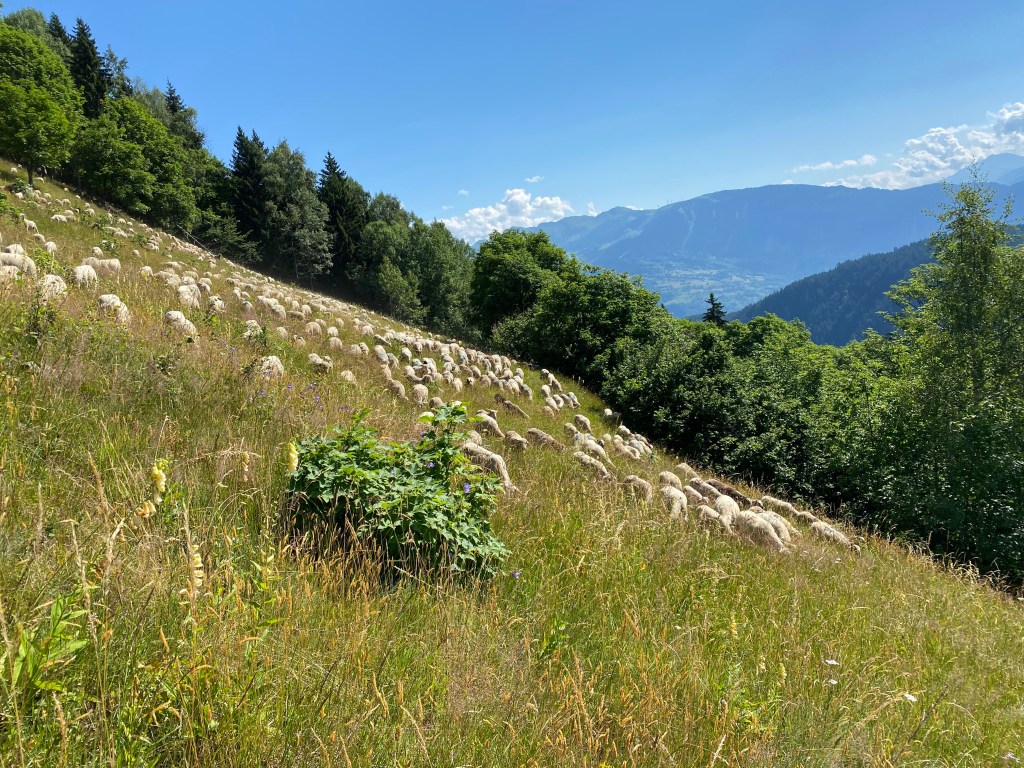
This inspired me to write about why we grass finish our lambs.

So what’s the difference between grass and grain finished meat?
In the article: A review of fatty acid profiles and antioxidant content in grass-fed and grain-fed beef by: Cynthia A Daley,1 Amber Abbott,1 Patrick S Doyle,1 Glenn A Nader,2 and Stephanie Larson2
The authors reviewed the difference in the nutritional profile of the meat on beef cattle between grass and grain finished meat.
They found out several important differences:
Omega 6 to Omega 3 ratio
There are two essential fatty acids (EFAs) in human nutrition: α-linolenic acid (αLA), an omega-3 fatty acid, and linoleic acid (LA), an omega-6 fatty acid. The human body cannot synthesize essential fatty acids, yet they are critical to human health.
Omega 3 fatty acids
Omega 3 fatty acids like αLA, are precurseurs of other important omega 3 fatty acids like eicosapentaenoic acid (EPA), docosapentaenoic acid (DPA), and docosahexaenoic acid (DHA).
Studies showed that EPA and DHA play a crucial role in the prevention of atherosclerosis, heart attack, depression and cancer [40,42]. In addition, omega-3 consumption reduced the inflammation caused by rheumatoid arthritis [43,44].
Omega 6 fatty acids
Just like omega 3’s the omega 6 fatty acids are also crucial for human health. They help stimulate skin and hair growth, maintain bone health, regulate metabolism, and maintain the reproductive system. Some also promote inflammation, which is an important defense mechanism of the body.
But to much will cause chronic inflammation, which causes a number of illnesses.
The right ratio
So it’s not a question on which fat is better but a question of a healthy ratio. A health ratio of those two is about 2 to 4 : 1 Omega 6 to Omega 3.
Table 1 shows the ratio of omega 3 to omega 6 in grass vs grain finished beef:
| Total n-6 | Total n-3 | n-6/n-3 ratio | |
| Study 1: Grass | 17.97 | 10.41 | 1.77 |
| Study 1: Grain | 17.08 | 1.97 | 8.99 |
| Study 2: Grass | 2.30 | 1.07 | 2.78 |
| Study 2: Grain | 2.58 | 0.19 | 13.6 |
As shown in table1, the ratio is always way more favorable in the grass finished beef, which contained the same amount of omega 6 but way more omega 3 fatty acids. Making it a lot healthier for us to consume.
Vitamins and anti-oxidant content
Not only is the fat contained in grass finished meat healthier, it also contains more vitamins and even anti oxydants.
Vitamin A
Meat that is grass finished contains a lot more vitamin A, because it is only obtained via fresh green grass by the animals. Vitamin A or Carotenoids, yellows the fat in the meat which is is negatively regarded. Although it has a healthier healthier fatty acid profile and a higher antioxidant content [89].
Vitamin E
Vitamine E is a powerful antioxidant and protect cells against the effects of free radicals. Like vitamine A it is particular high in green grass.
The concentration of natural vitamin E found in grain-fed beef ranged between 0.75 to 2.92 μg/g whereas pasture-fed beef ranges from 2.1 to 7.73 μg/g .
There are still more benefits to grass finishing lambs, but are a bit to vast for one article. If you are interested in this topic I invite you to read this review on the topic.
So to produce healthy meat we are only feeding our lambs what they can find outside. It might take longer to finish them but the health benefits outway the time constraint.
It is also economically more interesting to finish them on pasture, but this is a topic for another article.
 Friendly Flock
Leave a comment