Today I wanted to write about how I cultivate local micro-organismes. I will start with the idea behind using them.
We have a lot of rosebush, brush and wood on our land we manage. So many that not even goats can pass through them. As we dont have pigs (yet), I have to shred them mechanically so there will be some light for other plants to develop. After the shredding there is a lot of wood on the ground and thorns that might injure the sheep.
Traditionally the land gets burned a lot, to open up pasture. This favors the development of roses and other woody species.
So my idea is to use the local microorganisms to incolutate the wood and speed up decomposition.
The idea came from a book I read recently from Nigel Palmer: “The Regenerative Grower’s Guide to Garden Amendments: Using Locally Sourced Materials to Make Mineral and Biological Extracts and Ferments”.
It’s a very good book and has a lot of useful information in it.
The first step is to bury cooked riz in a forest witch is not disturbed by man. I chose a forest of a natural park not to far from here.
Aujourd’hui, je voulais écrire sur la façon dont je cultive les micro-organismes locaux. Je vais commencer par l’idée qui sous-tend leur utilisation.
Nous avons beaucoup de rosiers, de broussailles et de bois sur les terres que nous gérons. Il y en a tellement que même les chèvres ne peuvent pas les traverser. Comme nous n’avons pas (encore) de porcs, je dois les broyer mécaniquement pour qu’il y ait un peu de lumière pour que d’autres plantes puissent se développer. Après le broyage, il y a beaucoup de bois sur le sol et des épines qui peuvent blesser les moutons.
Traditionnellement, la terre est beaucoup brûlée, pour ouvrir des pâturages. Cela favorise le développement des roses et autres espèces ligneuses.
Mon idée est donc d’utiliser les micro-organismes locaux pour inoculer le bois et accélérer sa décomposition.
L’idée m’est venue d’un livre de Nigel Palmer que j’ai lu récemment : “The Regenerative Grower’s Guide to Garden Amendments : Using Locally Sourced Materials to Make Mineral and Biological Extracts and Ferments”.
C’est un très bon livre qui contient beaucoup d’informations utiles.
La première étape consiste à enterrer le riz cuit dans une forêt qui n’est pas perturbée par l’homme. J’ai choisi une forêt d’un parc naturel pas très loin d’ici.
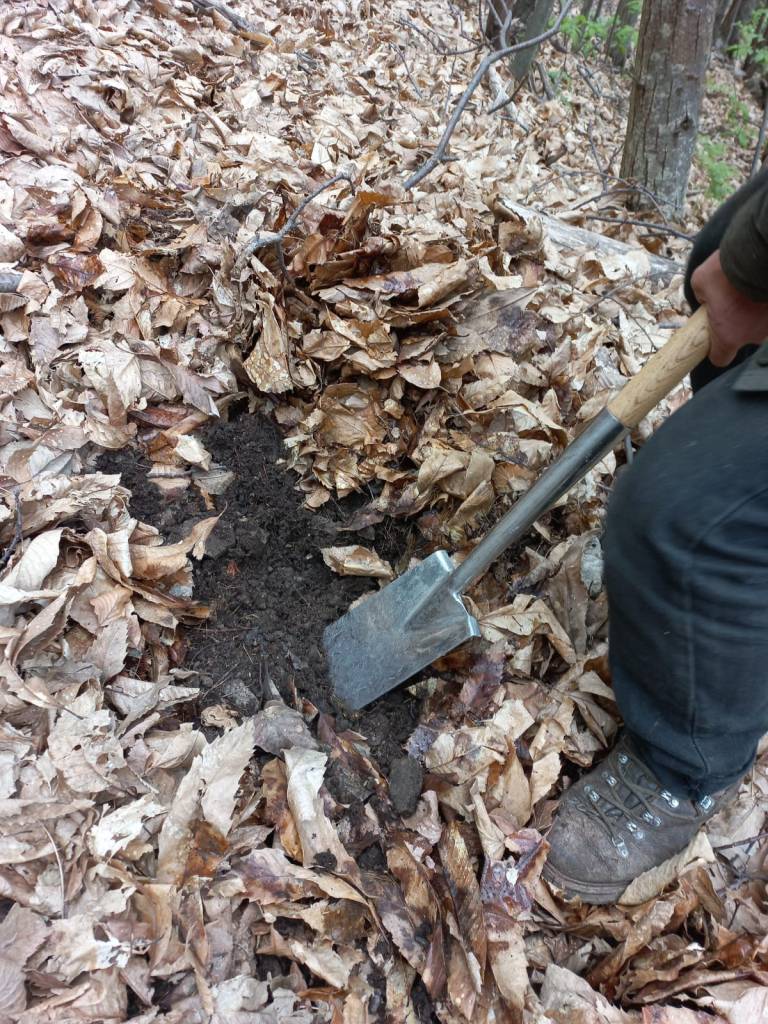
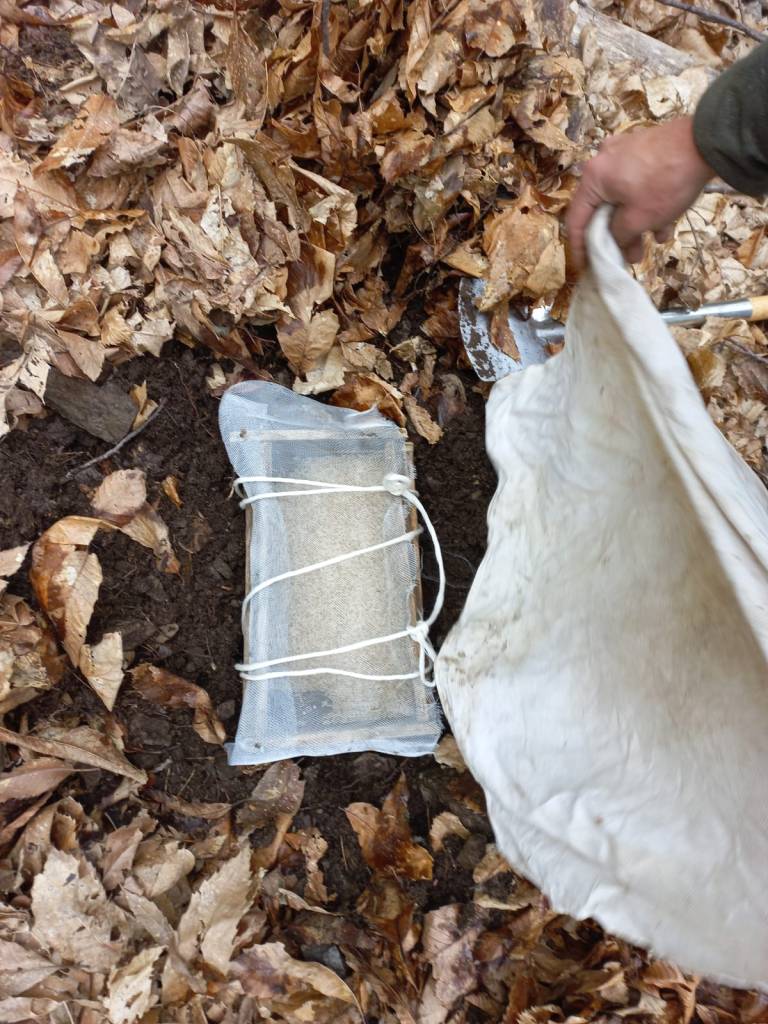
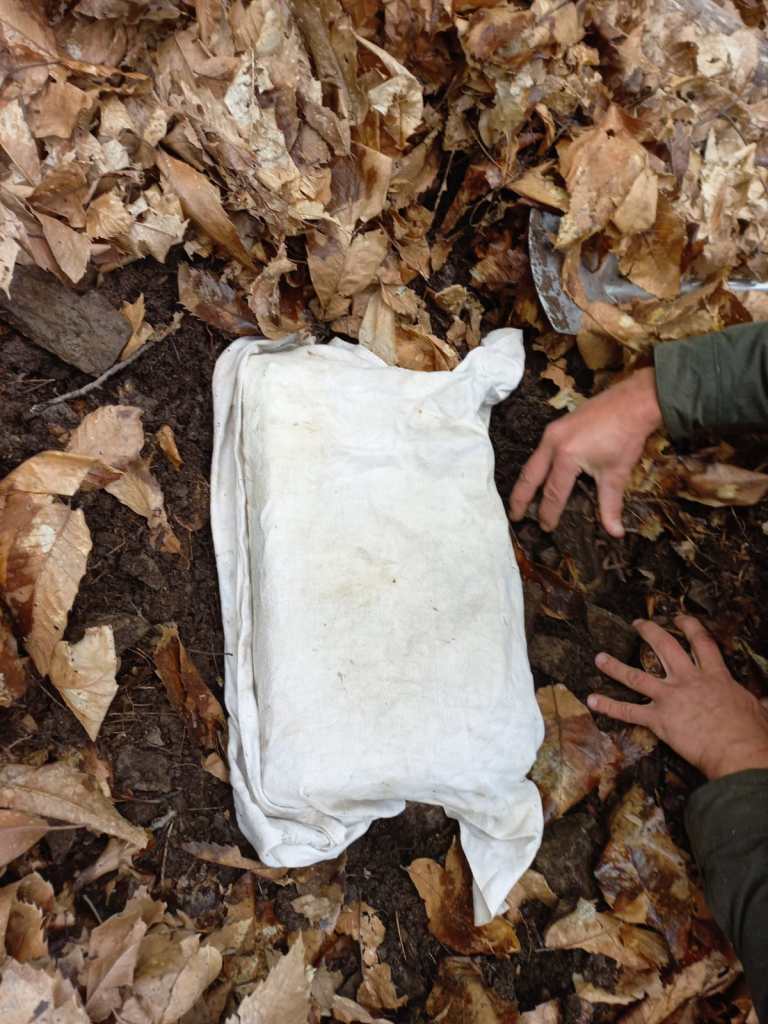
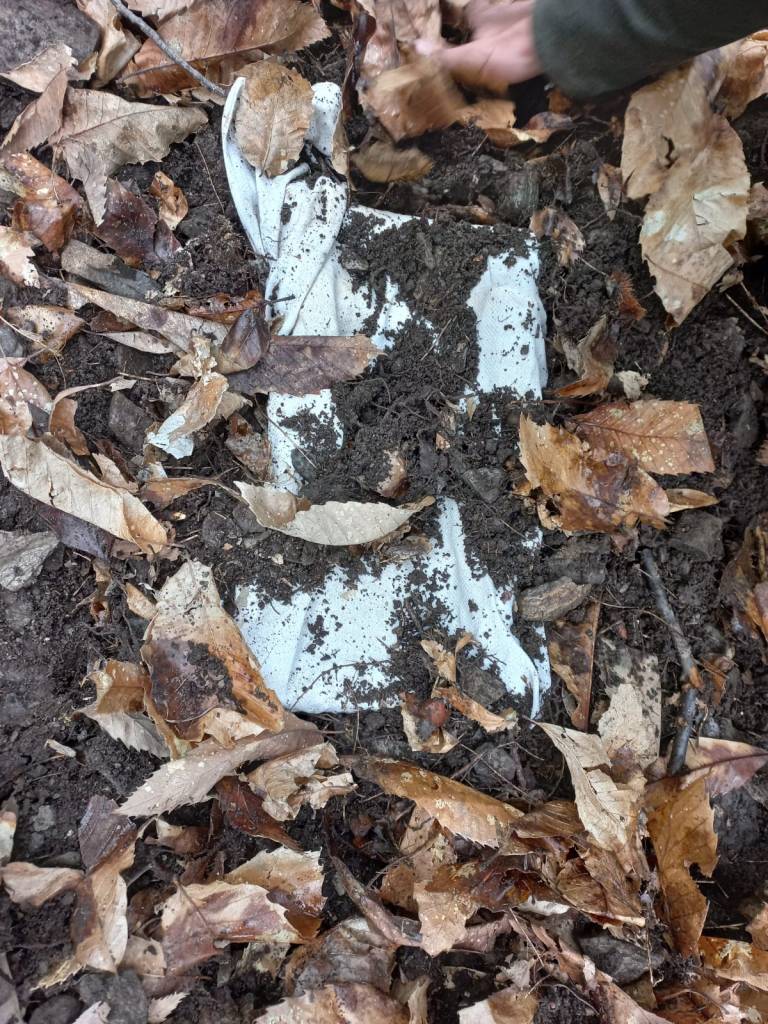
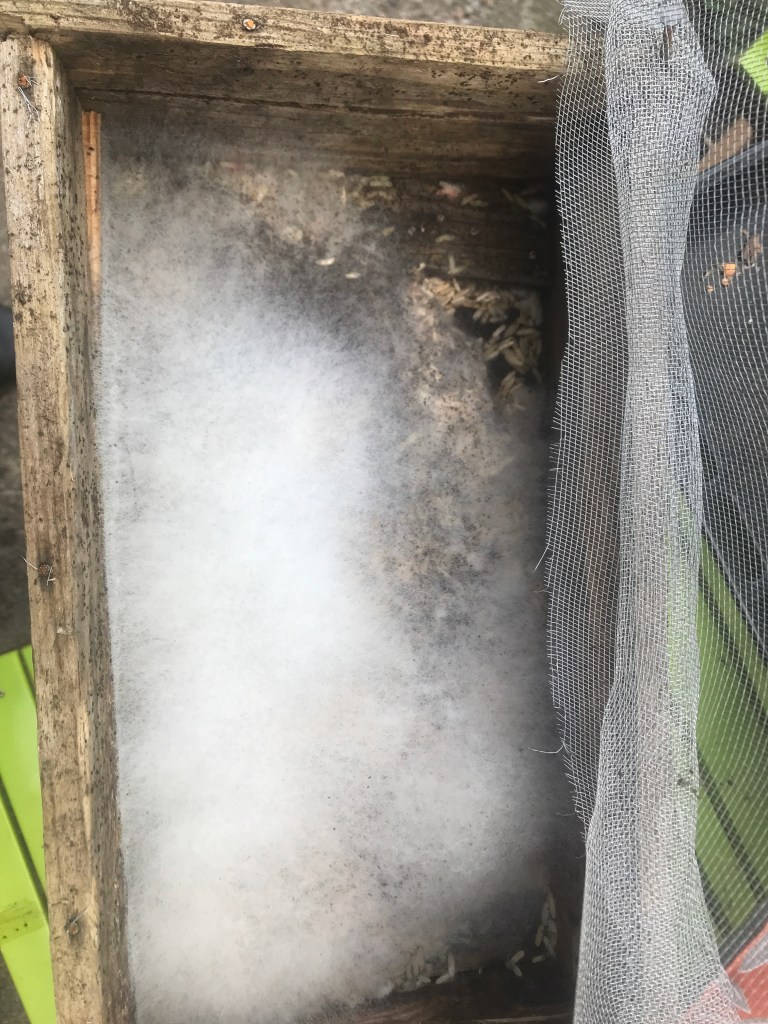
After I buried the riz I left it for a week fermenting. The riz developed a white foam on top of it (the local microorganisms).
Après avoir enterré le riz, je l’ai laissé fermenter pendant une semaine. Le riz a développé une mousse blanche sur son dessus (les micro-organismes locaux).
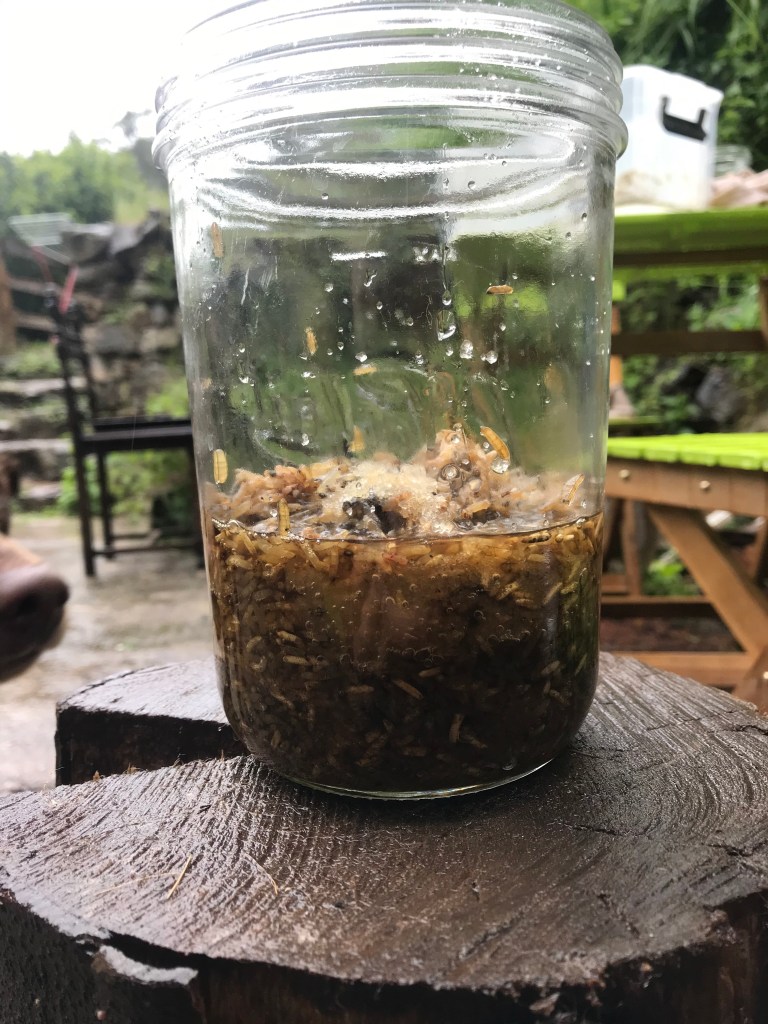
I then mixed the inoculated riz with the same amount of brown organic sugar and stored them in glass jars. This fermented also for a week. And now I got a brown liquid which can be stored in the refrigerator for several years.
J’ai ensuite mélangé le riz inoculé avec la même quantité de sucre bio roux et je les ai stockés dans des bocaux en verre. Cela a également fermenté pendant une semaine. Et maintenant j’ai obtenu un liquide brun qui peut être conservé au réfrigérateur pendant plusieurs années.
For the next step I will need 30kg of wheat bran. I will try and get some in the next weeks. It’s not to urgent because I will inoculate the wood in automne, so it can slowly start to decompose over winter.
In the next blog I will write about soil testing and ecological monitoring. This week I started to set up some transects and I did some soil testing!
Stay tuned 🙂 !
Pour l’étape suivante, j’aurai besoin de 30 kg de son de blé. Je vais essayer d’en trouver dans les prochaines semaines. Ce n’est pas si urgent, car je vais inoculer le bois en automne, afin qu’il puisse commencer à se décomposer lentement pendant l’hiver.
Dans le prochain blog, je parlerai de l’analyse du sol et du suivi écologique. Cette semaine, j’ai commencé à mettre en place des points d’observations et j’ai fait quelques analyse de sol !
Restez à l’écoute 🙂 !
 Friendly Flock
Leave a comment